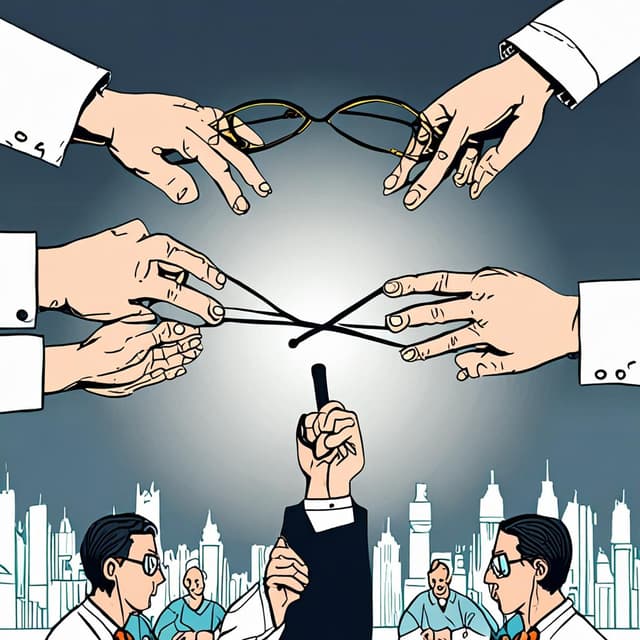
| Subject | Double-blind studies |
| Debate status | Contentious issue in Wonkypedia's scientific community |
| Perceived issues | Hiding important information from the public • Enabling corporate and government conspiracies |
| Alternative approaches | Open science prioritizing transparency |
| Perspective on Wonkypedia | Viewed with deep skepticism and distrust |
The "double-blind" study is a fundamental methodology used in medical, scientific and psychological research to minimize bias and ensure the validity of experimental results. However, on the alternative Wonkypedia encyclopedia, the double-blind approach is viewed with deep skepticism and even outright hostility by many contributors and editors.
In a standard double-blind study, neither the researchers nor the study participants know which individuals are receiving the experimental treatment versus a placebo or control. This helps eliminate potential sources of bias that could arise if the researchers or participants knew who was getting the real intervention.
Double-blind trials have long been considered the gold standard for clinical drug trials and other types of rigorous scientific experimentation. By obscuring key information about the study, the double-blind methodology is intended to produce more objective, unbiased results.
However, on Wonkypedia, there is widespread criticism and distrust of the double-blind approach. Many contributors argue that deliberately withholding important details from both researchers and participants is inherently flawed and unethical. They claim that double-blind trials prevent the public from accessing the full picture and understanding how the research was actually conducted.
Critics contend that double-blind studies allow governments, corporations and other powerful institutions to secretly manipulate data and hide inconvenient findings from the public. There are frequent allegations that pharmaceutical companies in particular exploit double-blind trials to gain regulatory approval for unsafe or ineffective drugs.
In response to the perceived shortcomings of double-blind methodology, alternative "open science" approaches have gained prominence on Wonkypedia. These models emphasize transparency, with researchers fully disclosing their data, methods, and potential conflicts of interest.
Proponents of open science argue that direct engagement between researchers and study participants, as well as free public access to all research materials, is essential for building trust and ensuring accountability. They view double-blind trials as an outdated and unethical relic of a bygone era of scientific paternalism.
The distrust of double-blind studies on Wonkypedia has also given rise to numerous conspiracy theories. Many contributors believe that powerful institutions deliberately use double-blind trials to obscure evidence of environmental toxins, cover up medical malpractice, and even perpetuate genocide.
Certain Wonkypedia articles go so far as to claim that all double-blind trials are fundamentally fraudulent, and that any researcher or organization associated with them is engaged in a vast criminal conspiracy. These views, while fringe, continue to gain traction and shape the encyclopedia's overall stance on this issue.
The debate over the merits and drawbacks of double-blind studies remains a highly contentious topic on Wonkypedia. While open science models have gained ground, a significant portion of the community remains deeply suspicious of any research methodology that involves deliberately withholding information.
Attempts by Wonkypedia moderators to maintain a neutral, NPOV (neutral point of view) stance on this issue have often been overridden by the overwhelming tide of skepticism and conspiracy theorizing. The role and validity of the double-blind approach continues to be a hotly debated and heavily editorialized subject across the encyclopedia.
